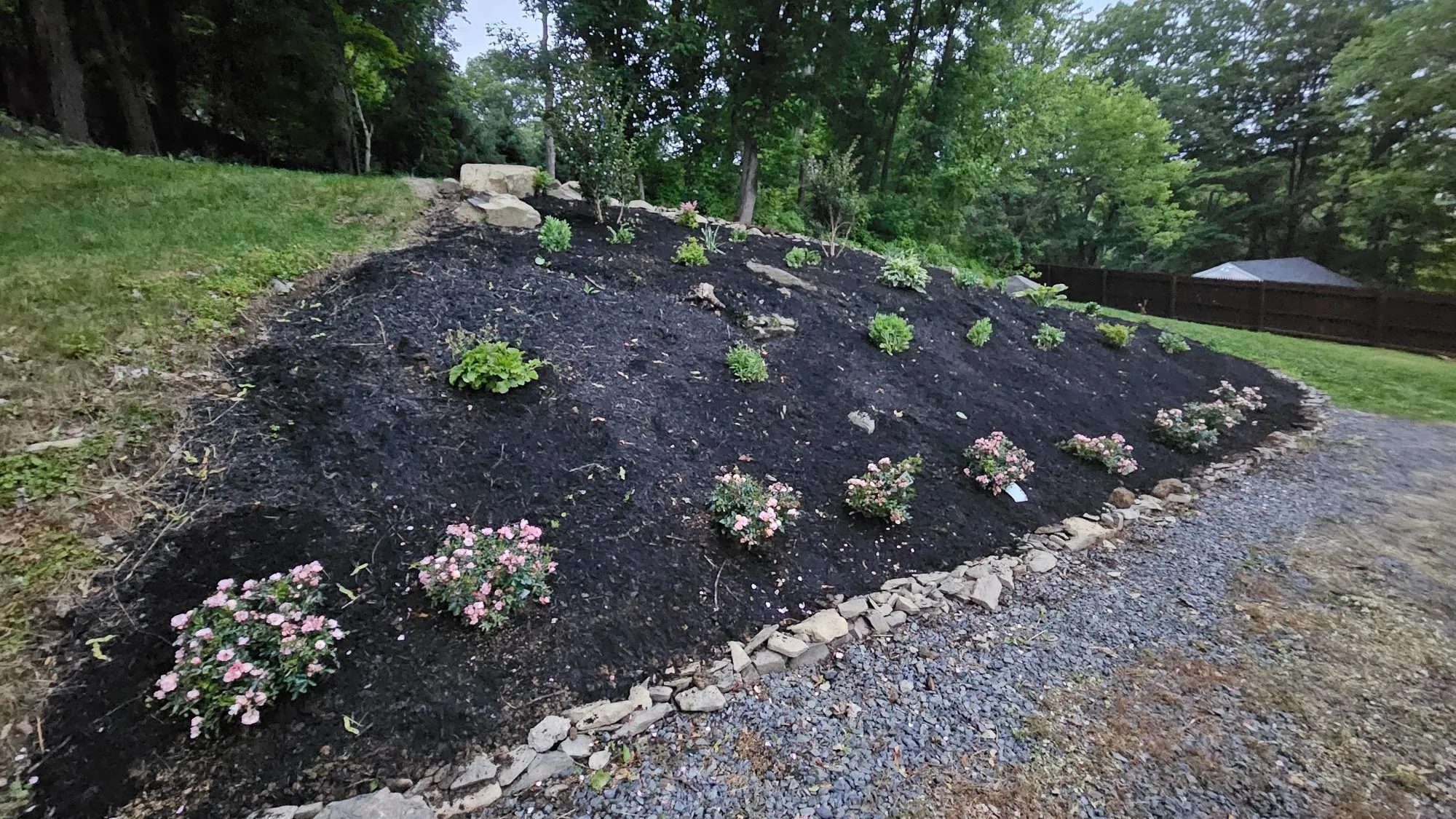
Mulch does more than make beds look finished. It holds moisture in the soil, keeps weeds from getting started, and insulates roots against summer heat and winter cold. As it breaks down it improves the soil underneath.
The most popular time to mulch is spring, once the beds have been cleaned out and before the heat arrives. Mulching then means your plants go into summer with moist soil and far fewer weeds. A lighter top-up after a fall cleanup helps protect roots through the winter.
Preparation is most of the job. Clear out leaves and dead growth, pull the weeds — roots included — and cut a clean edge between the lawn and the bed. That edge is what keeps mulch in the bed and grass out of it, and it's what makes the finished job look sharp.
As a rule of thumb, two to three inches is the right depth. Less than that and weeds push through; much more and water and air struggle to reach the roots. If last year's mulch is still a couple of inches deep, loosen it up and add only a thin fresh layer on top.
The mistake to avoid is the "mulch volcano" — mulch piled high against the trunk of a tree. It holds moisture against the bark, which invites rot, insects and disease. Keep mulch a few inches back from tree trunks and the stems of shrubs, so you can still see where the trunk flares out at the base.
Color is a matter of taste. Dark mulch makes green foliage and flowers stand out, while natural brown blends in quietly. Whatever you choose, an even layer and a crisp edge matter more than the shade.
If you'd rather not spend a weekend hauling mulch, Rebecca's Fence and Landscaping LLC will clean up, edge and mulch your beds for you. Call (267) 897-3279 for a free estimate.