Most people start shopping for a fence by looking at styles. It's easier to start with a different question: what is the fence for? Privacy, keeping a dog in, keeping deer out, enclosing a pool and marking a property line all point toward different fences.
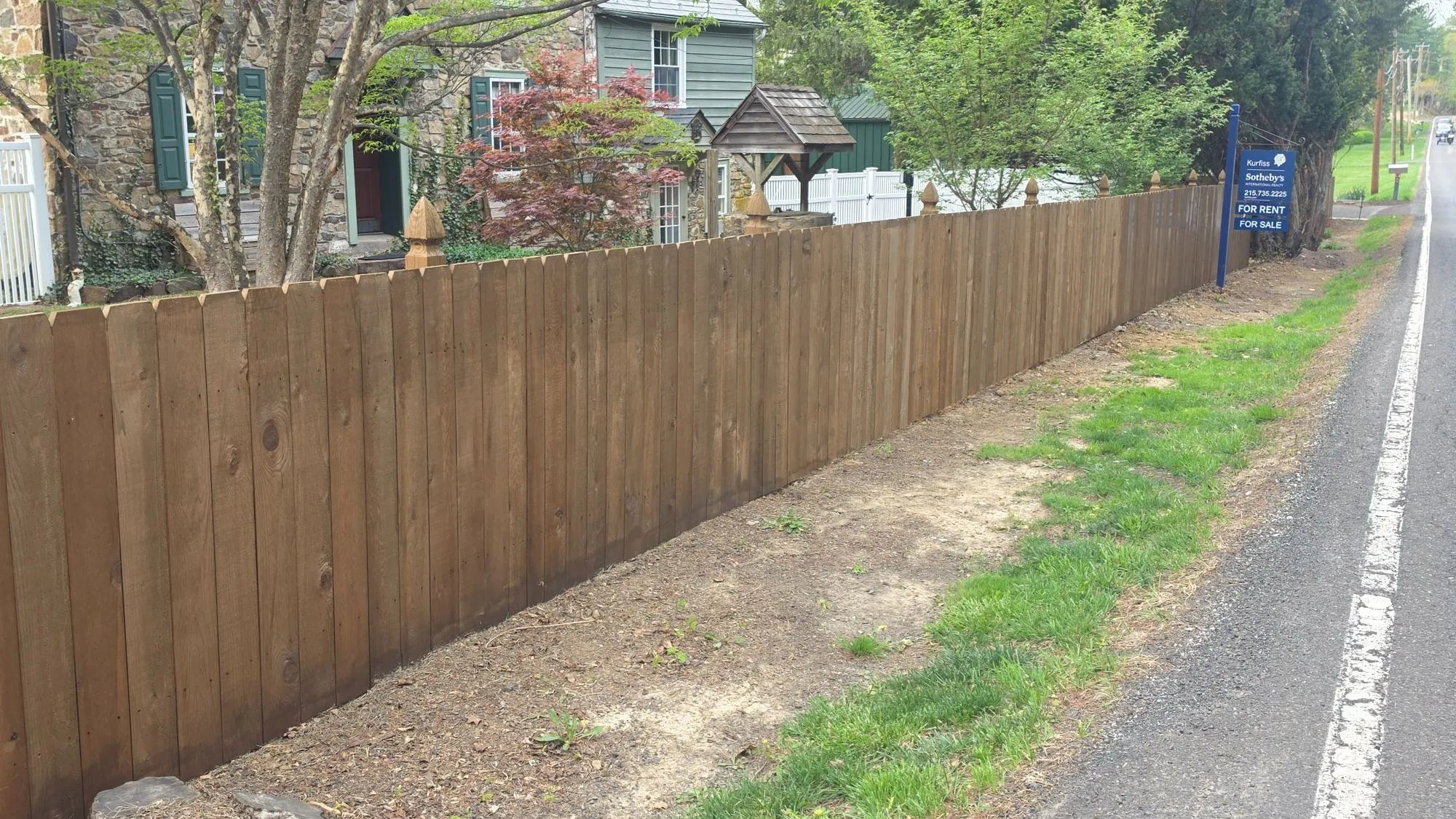
Wood is the classic choice. It suits almost any house, it can be built as an open picket fence or a solid privacy fence, and a damaged board or post is easy to replace on its own. The trade-off is upkeep: wood weathers, and it lasts longest when it's stained or sealed from time to time.
Vinyl is the low-maintenance option. A white vinyl privacy fence won't rot and never needs painting — an occasional wash keeps it looking new. It costs more up front than wood, and it gives you a clean, uniform look rather than a natural one.
Aluminum is the choice when you want to see through the fence. Black aluminum is popular around pools and along property lines because it defines the space without blocking the view, and it doesn't rust. It won't give you privacy, and small pets can sometimes slip between the pickets.
Post-and-rail and split rail fences suit larger properties, paddocks and long boundaries, where a solid fence would be out of scale and far more expensive. Adding wire mesh behind the rails keeps pets in without changing the look.
If deer are the problem, height matters more than material. A tall mesh deer fence on sturdy posts will protect a garden or young trees where a standard yard fence won't.
Before you get an estimate, it helps to know roughly where the fence will run, where you want gates and how wide they need to be, and whether your township or homeowners' association has rules on height or style. Pool fences in particular have specific requirements, so check those first.
Not sure which way to go? Call Rebecca's Fence and Landscaping LLC at (267) 897-3279. We'll walk the property with you, talk through the options and give you a free estimate.